
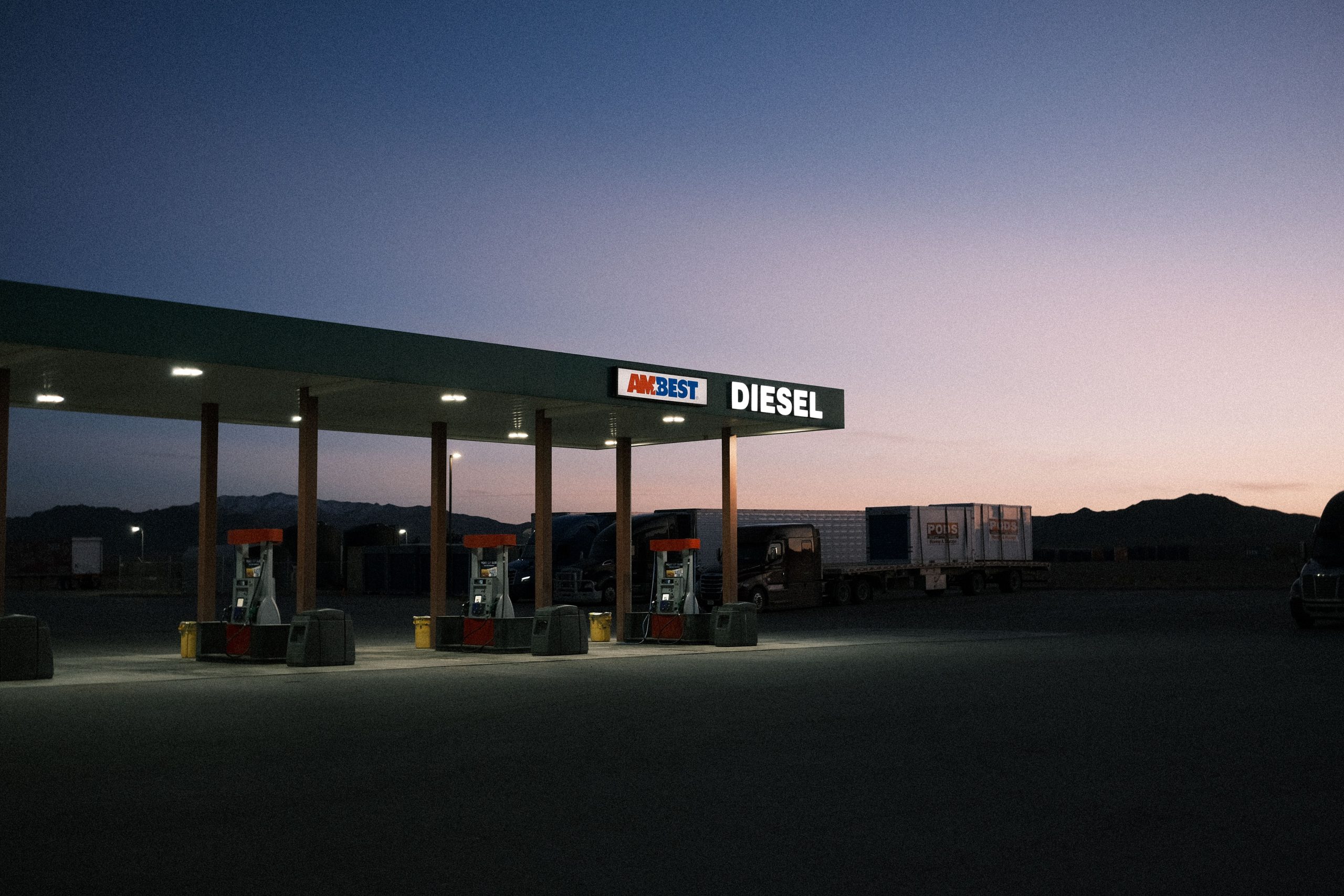
The Conservative Party has pledged to scrap the planned phase out dates for new diesel vans and HGVs if it returns to government, putting the future of commercial vehicle decarbonisation firmly back into the political debate.
Under current policy, sales of new non-zero emission HGVs weighing up to and including 26 tonnes are due to end from 2035, followed by all remaining new non-zero emission HGV sales by 2040. The Conservatives have now proposed removing those deadlines, arguing that the transition towards zero emission vehicles is moving ahead of the technology and infrastructure available to support it.
The party has also pledged to abolish the Zero Emission Van Grant and Zero Emission Truck Grant, claiming this would save £877 million in planned government spending. Its proposed approach would instead focus on a technology neutral, multi fuel transition, allowing operators to choose the most appropriate technology for their individual operations rather than being pushed towards a particular vehicle type.
For the road freight sector, the argument is not simply about whether diesel should remain on the road. The challenge is how quickly alternative technologies can become commercially and operationally viable across a diverse HGV market. While battery electric trucks are already being introduced into fleets, adoption remains at an early stage and operators continue to face significant questions around vehicle cost, range, payload, charging infrastructure and access to suitable grid capacity.
Those challenges are particularly significant for an industry operating on tight margins. An electric HGV can require substantially greater upfront investment than its diesel equivalent, while installing suitable depot charging infrastructure can add further cost and complexity. The economics also vary considerably between operations, meaning a solution that works for a predictable regional route may not yet be suitable for long distance or highly intensive freight movements.
This is where the Conservative proposal creates a wider question for the industry. Removing the phase out dates could give operators greater flexibility when making fleet decisions, particularly where zero emission alternatives do not yet meet their operational requirements. However, changing the direction of policy also risks creating uncertainty for manufacturers, infrastructure providers and energy companies making long-term investment decisions around the transition.
The Road Haulage Association has welcomed the debate generated by the announcement, while maintaining that reducing emissions from HGV, coach and van fleets remains a major challenge for the sector. Its response highlights the need to maintain the reliability, range, payload and flexibility currently provided by diesel vehicles while developing the infrastructure and investment needed to support lower emission alternatives.
The RHA is also calling for a clear and practical long-term approach that recognises the different requirements of commercial vehicle operations. Rather than relying on a single technology, its position supports a broader mix of solutions, including electrification, sustainable fuels and hydrogen where these can provide an effective route to reducing emissions. At the same time, the removal of financial support for zero emission vehicles raises questions about how operators will be supported through the transition and whether reducing incentives could slow the development of the market.
The timing of the announcement is significant. The Government has been investing in accelerating zero emission HGV adoption, including funding for vehicles and charging infrastructure, while also consulting on the regulatory framework that could support the 2040 phase out. Earlier this year, additional funding was made available to reduce the upfront cost of electric trucks, with discounts of up to £120,000 available depending on vehicle size.
The industry is therefore facing a difficult balance between ambition and practicality. Setting firm deadlines can encourage manufacturers, infrastructure providers and fleets to invest ahead of the transition, but targets alone cannot resolve the operational barriers facing hauliers. Equally, removing targets without a clear alternative pathway could make it harder to build the investment and infrastructure needed to reduce emissions at scale.
Our MD, Kelly Hobson, commented:
“Moving the deadlines risks sending the wrong signal to an industry that needs greater certainty, not less. The transition of road freight is complex and it will take time, which is precisely why having clear, consistent timelines matters.
Businesses need to start planning now. Fleet replacement cycles, infrastructure, grid connections, operational changes and investment decisions happen over many years. A deadline creates the certainty needed for businesses to build those considerations into their strategy rather than continually postponing difficult decisions.
That doesn’t mean electrification will happen at the same pace for every fleet, or that we should ignore the role of transitional solutions. We absolutely need a pragmatic, multi-solution approach while zero-emission technology and infrastructure develop. But pragmatism shouldn’t become an argument for moving the destination.
What the industry needs is a cohesive long-term plan that connects policy, infrastructure, energy, technology and commercial reality. Keep the direction and timelines clear, then focus our collective effort on removing the barriers that currently make the transition difficult.
Businesses can adapt to ambitious targets when they have time to prepare. What is much harder to plan for is uncertainty.”
The debate also highlights why fleet decarbonisation cannot be considered in isolation. Vehicle technology, energy supply, charging infrastructure, operating models, customer demand and government policy all need to develop together. For operators, the question is increasingly less about choosing between diesel and electric in the abstract and more about understanding which technologies can work for which operations, and what needs to change to make those solutions commercially viable.
This conversation will continue at Sustainable Logistics LIVE London this November. The RHA will be represented at the event, with Chris Ashley, Head of Policy, joining our panel The 2027 Reality Check: Can Fleets Actually Electrify? The discussion will explore the practical realities facing fleets as the industry considers what electrification can deliver, where the barriers remain and what needs to happen next.
With the future of diesel HGVs, electrification and the wider mix of technologies now back under political scrutiny, conversations like this will be essential to understanding what the transition means for businesses in practice. Join us at Sustainable Logistics LIVE London on 10 November and be part of the conversation shaping the future of sustainable logistics: Sustainable Logistics LIVE 2026 London Tickets, Tuesday 10 November • 9 AM – 4:30 PM | Eventbrite