
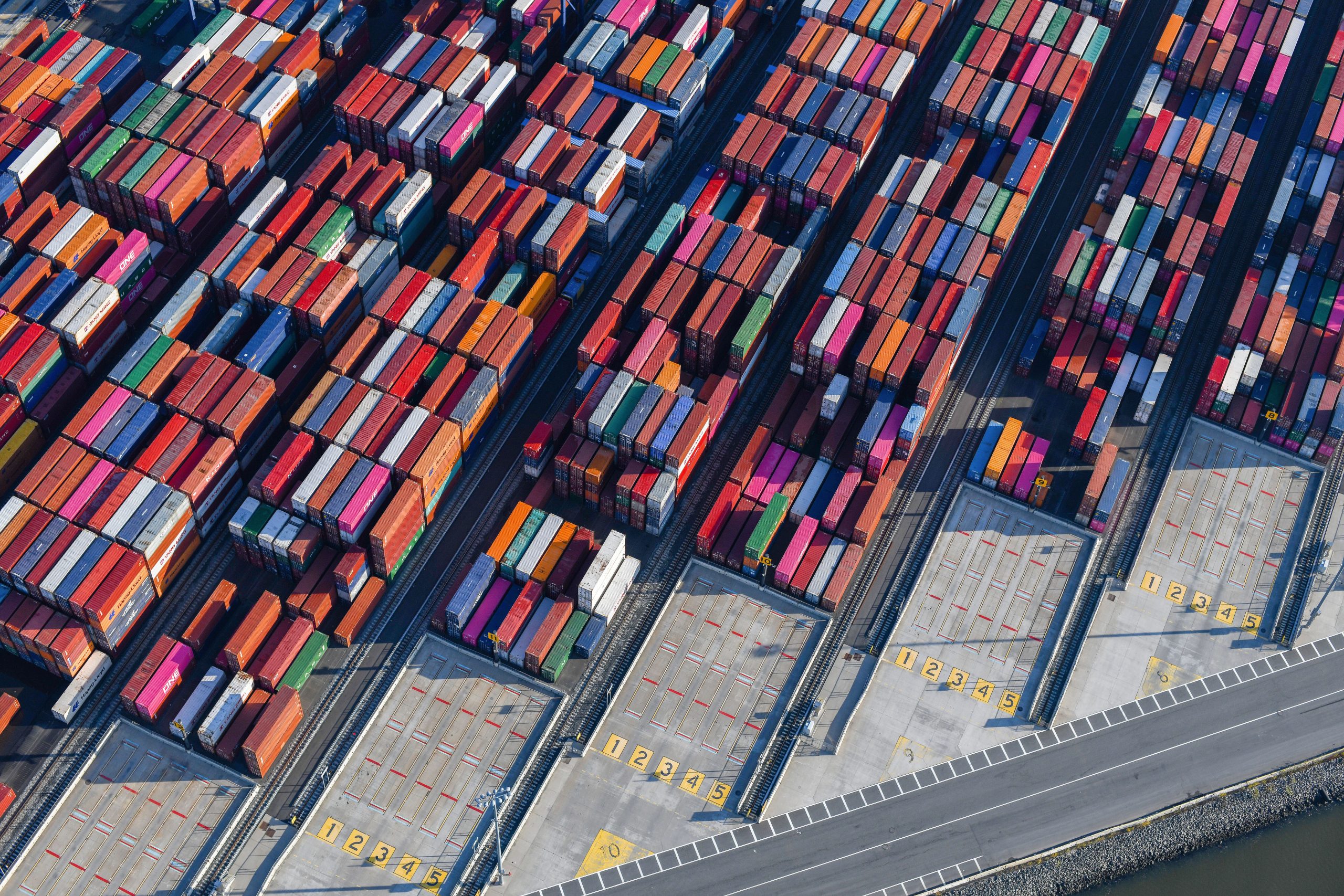
Global beauty company Coty is stepping up efforts to reduce emissions across its international supply chain by moving away from air freight and increasing its use of ocean and rail transport. The strategy forms part of the company’s wider decarbonisation programme, with a focus on improving transport efficiency, working more closely with logistics partners and reducing the environmental impact of moving products around the world.
According to Coty’s FY26 Sustainability Report, the company has achieved a 48% reduction air freight since 2019, as it looks to bring its reliance on air cargo as close to zero as possible. However, progress has not been entirely straightforward, with global supply chain disruption contributing to a 33% increase in air freight emissions between FY25 and FY26. By continuing to transfer shipments to sea and rail, Coty estimates it avoided a further 3% year-on-year increase in air freight volumes, highlighting the role that alternative transport modes can play in managing emissions even when wider supply chain pressures make reductions more difficult.
The shift towards ocean and rail freight reflects a growing recognition that transport choices can have a significant influence on the carbon footprint of international supply chains. While air freight offers speed and flexibility, it generally carries a much higher emissions intensity than other freight modes. Moving suitable shipments by sea or rail can therefore offer substantial opportunities to reduce transport emissions, provided businesses can plan around different transit times, capacity requirements and delivery schedules.
Road transport is another important part of Coty’s decarbonisation plans, accounting for approximately 91% of the total weight of goods shipped by the company. During FY26, Coty introduced three electric vehicles in Goiânia, Brazil, to transport products between its factory and distribution centre. Although a relatively small deployment, the initiative demonstrates how electrification can be introduced into established logistics operations, particularly on regular routes where vehicle movements and charging requirements can be planned in advance.
Alongside changing transport modes, Coty is working to improve how efficiently its existing freight network operates. This includes increasing truck and container utilisation, improving route planning and working with suppliers and logistics partners to identify further opportunities for freight innovation. The company also uses EcoTransIT World software to calculate emissions from managed transport activities, providing greater visibility of its freight footprint and helping identify where targeted reductions can be made.
These transport initiatives sit within Coty’s wider Becoming Carbon Kind strategy, which addresses emissions across its operations and value chain. In its FY26 Sustainability Report, Coty confirmed that its net-zero target had been validated by the Science Based Targets initiative, committing to reduce absolute Scope 1, 2 and 3 greenhouse gas emissions by 90% by 2050 against an FY19 baseline. The company also reported a 29% reduction in Scope 3 emissions and an 83% reduction in Scope 1 and 2 emissions against the same baseline.
Supplier engagement is another important part of this approach. Through its Becoming Carbon Kind Together programme, Coty is encouraging suppliers to establish emissions reduction targets, improve environmental reporting and provide more detailed carbon data. Its wider sustainability commitments also extend to packaging, responsible sourcing and resource efficiency, recognising that reducing the environmental impact of products requires action throughout their lifecycle rather than within manufacturing and transport alone.
Coty’s freight strategy demonstrates how businesses can make meaningful progress by examining the way goods move through their supply chains and identifying opportunities to change established practices. However, shifting away from air freight is not simply a matter of choosing a different transport mode. It requires better forecasting, coordination between suppliers and logistics providers, suitable infrastructure and enough flexibility within supply chains to accommodate longer transit times. Global disruption also highlights the importance of balancing emissions reductions with operational resilience and customer requirements.
For the wider logistics industry, this is an important reminder that transport decarbonisation will require a combination of solutions rather than reliance on a single technology or approach. From modal shift and vehicle electrification to improved utilisation and better emissions data, businesses have opportunities to reduce their environmental impact while improving the efficiency of their operations.
These are exactly the challenges we will be exploring at Sustainable Logistics LIVE 2026 in London on 10 November. Bringing together logistics providers, shippers, sustainability specialists and industry leaders, SLL2026 will focus on the practical barriers and opportunities involved in accelerating supply chain decarbonisation. Through expert discussions, interactive BriteLabs and opportunities to share knowledge, the event will explore how collaboration can turn individual sustainability ambitions into meaningful industry-wide progress. Register now: Sustainable Logistics LIVE 2026 London Tickets, Tuesday 10 November • 9 AM – 4:30 PM | Eventbrite
Read Coty’s full fiscal year 2026 Sustainability Report: Coty-FY26-SustainabilityReport-10.pdf