
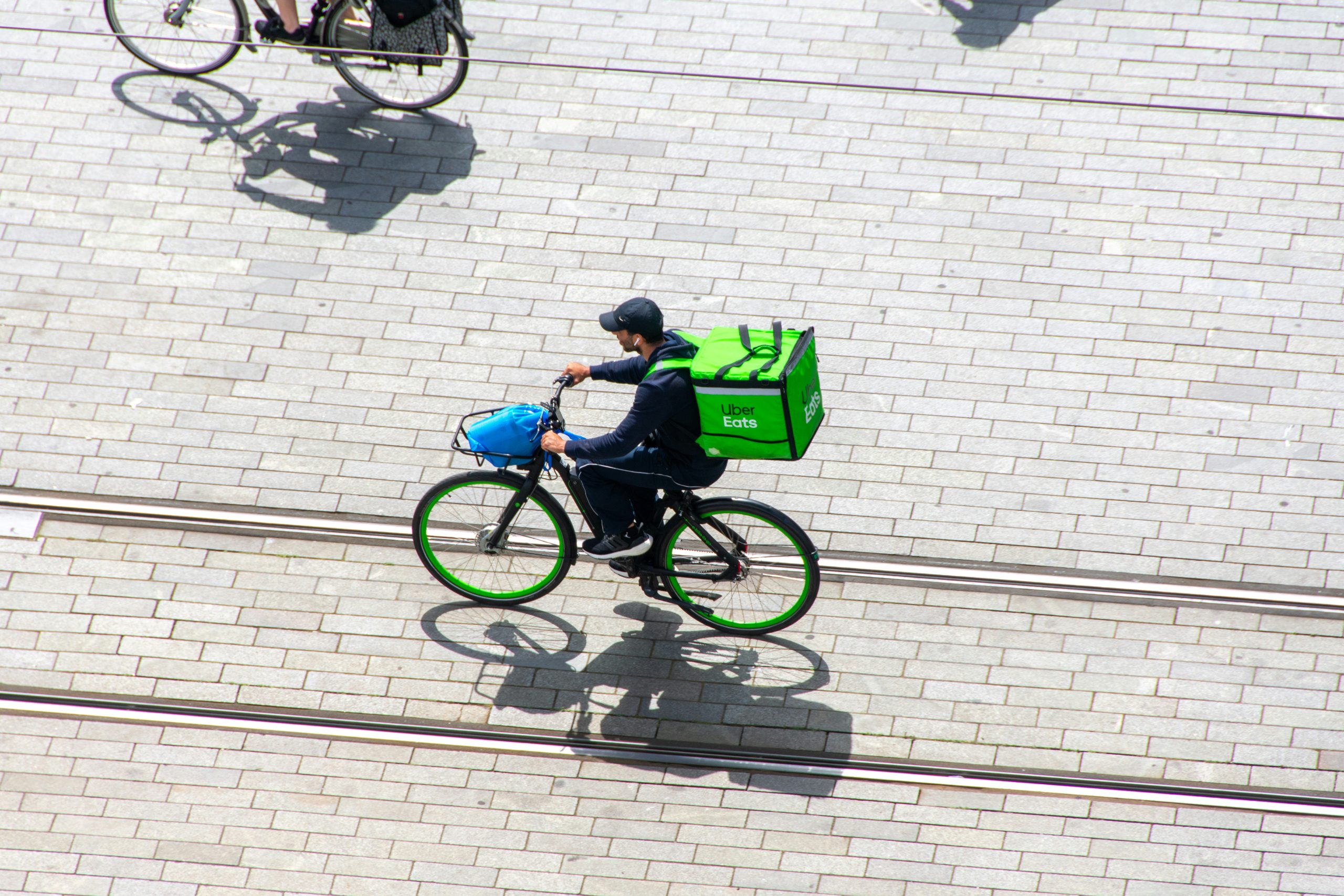
John Lewis is expanding its rapid delivery service as it marks 25 years of online shopping, making around 10,000 products available to customers in as little as 30 minutes through partnerships with Deliveroo and Uber Eats. Announced on 19 October, the rollout covers the catchment areas of eight stores across London and selected home counties, reflecting how retailers are adapting their fulfilment operations to meet growing expectations for convenience and speed.
The expansion builds on an earlier pilot and forms part of the retailer’s wider £800 million transformation programme, which combines investment in physical stores with improvements to its website, mobile app and delivery services. Alongside rapid delivery, John Lewis has expanded its use of store stock to fulfil online orders, having delivered more than 1.3 million items directly from its shops to customers since scaling the approach. By using existing stores as fulfilment points, the retailer can make more products available online while bringing inventory closer to customers.
For logistics operations, the shift towards faster fulfilment creates both opportunities and practical challenges. Retailers need to coordinate stock availability, order processing and delivery capacity to meet shorter timeframes, particularly during busy trading periods when demand can rise sharply. John Lewis expects to process up to 150,000 online orders a day during peak trading, highlighting the importance of effective fulfilment networks that can respond to fluctuating demand without compromising service.
However, increasing delivery speed also raises questions about how last-mile operations can be managed efficiently as customer expectations evolve. Shorter delivery windows require close coordination between retailers and their delivery partners, with vehicle utilisation, route planning and the location of stock all influencing how efficiently orders can reach customers. As rapid delivery becomes a more established part of retail, businesses will need to balance convenience with the operational costs and environmental impacts associated with moving individual orders.
John Lewis is also working to reduce the environmental impact of its wider transport network. According to the John Lewis Partnership, transport accounts for more than 40% of its Scope 1 and 2 emissions, making fleet decarbonisation an important part of its climate strategy. The Partnership plans to transition its 580 heavy-duty trucks to biomethane derived from waste materials by 2028, while aiming to have around 2,500 electric vans in service by 2030. It has also committed to ending fossil fuel use across its transport fleet by the end of the decade, combining electric vehicles with alternative fuels and other efficiency improvements.
Progress is already being reported, with the Partnership stating that transport emissions have fallen by 54% since 2018. Its approach includes electrically powered trailer refrigeration units and trials of wireless charging for electric delivery vans, alongside efforts to improve the efficiency of its heavier vehicles. These measures demonstrate how retailers can pursue different technologies across their fleets, depending on vehicle requirements, journey distances and the infrastructure available.
The expansion of rapid delivery and the Partnership’s investment in lower-emission transport highlight two connected priorities for modern retail logistics: meeting increasingly demanding service expectations while reducing the environmental impact of fulfilment. Faster delivery does not automatically mean more efficient or lower-emission operations, so how orders are consolidated, vehicles are deployed and routes are planned will remain important as these services grow. Integrating customer convenience with practical decarbonisation measures will be central to building retail supply chains that are both commercially effective and more sustainable.
Sustainable Logistics LIVE 2026 takes place on 10 November at the Royal Geographical Society in London, bringing together logistics and supply chain professionals for a day of collaboration, practical insight and learning. Through expert panels, interactive BriteLabs and opportunities to exchange ideas with others across the industry, SLL2026 will explore how businesses can turn sustainability ambitions into meaningful operational change. Find out more and book your place at Sustainable Logistics LIVE 2026: Sustainable Logistics LIVE 2026 London Tickets, Tuesday 10 November • 9 AM – 4:30 PM | Eventbrite