
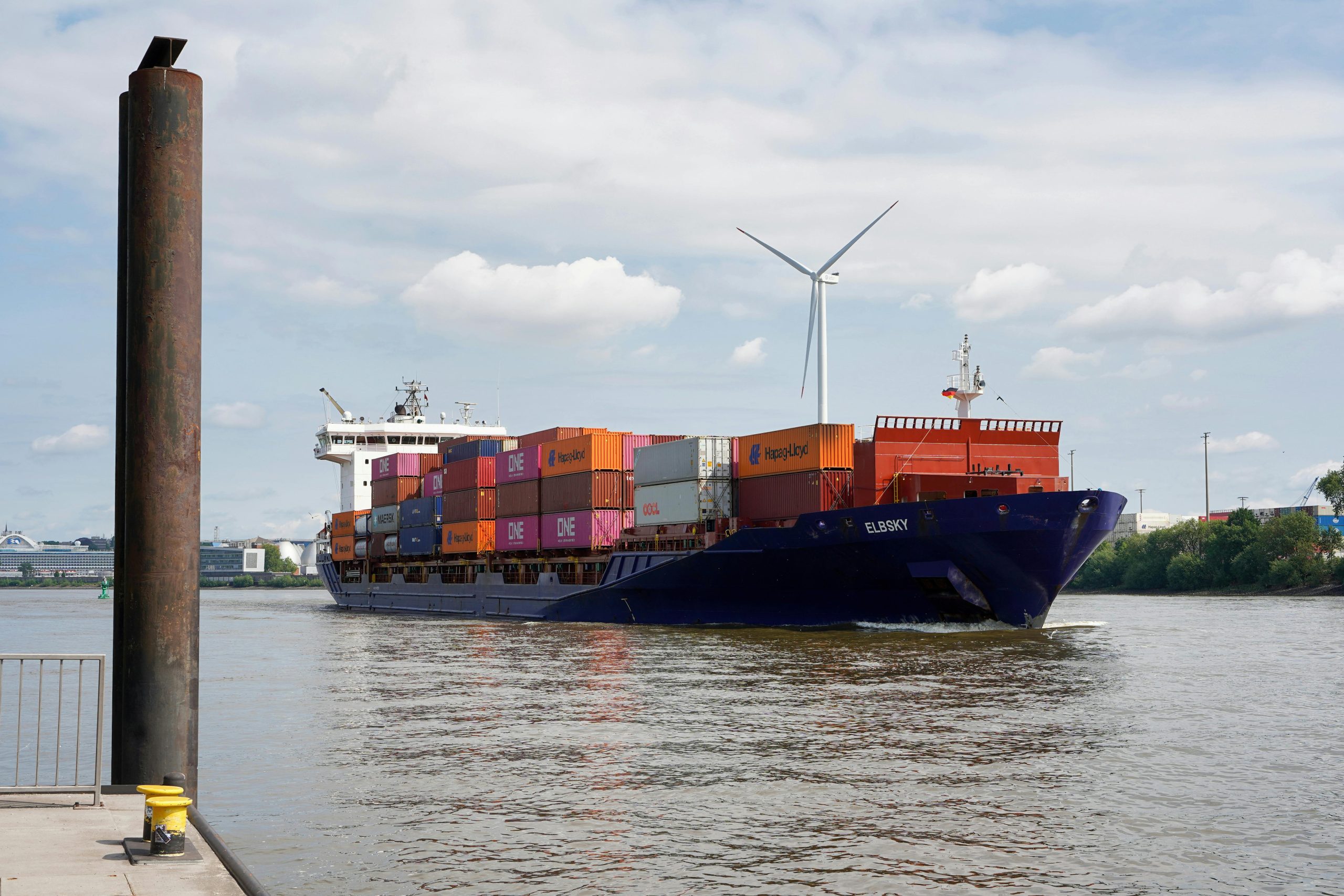
The global shipping industry is entering a new phase of decarbonisation as major logistics players move beyond climate pledges and into collaborative action.
This month, shipping giant Hapag Lloyd and global logistics provider Kuehne+Nagel announced a new partnership focused on reducing emissions across ocean freight operations through the use of sustainable marine fuels. The agreement represents the first direct collaboration between the two organisations on lower emission shipping solutions and reflects a growing shift towards scalable, commercially viable sustainability strategies within global supply chains.
The initiative will see approximately 3,300 TEU of cargo transported between East Asia and Northern Europe covered under Hapag Lloyd’s Ship Green programme between April and December 2026. Through the use of waste based sustainable marine fuels, the partnership is expected to reduce almost 3,000 tonnes of CO2 equivalent emissions on a well-to-wake basis.(Hapag-Lloyd, 2026)
Sustainable Shipping Moves Into Operational Reality
For years, sustainable shipping has largely been discussed through future targets and long-term ambitions. What makes this agreement notable is the operational approach now emerging across the industry.
Rather than waiting for entirely new infrastructure systems to be developed, companies are increasingly adopting transitional solutions that can reduce emissions immediately while larger scale technologies continue to mature.
The partnership between Hapag Lloyd and Kuehne+Nagel is built around a book and claim system, allowing verified emissions reductions from sustainable fuel usage to be allocated across customer shipments, regardless of where the fuel is physically consumed within the fleet.
This approach is quickly becoming one of the most practical pathways for scaling sustainable shipping at speed, particularly while supply of alternative fuels remains limited.
Why Ocean Freight Decarbonisation Matters
Shipping currently accounts for approximately 3 percent of global greenhouse gas emissions and remains one of the most difficult sectors to decarbonise due to its dependence on fossil fuels and the complexity of international trade networks.
Pressure is now mounting from regulators, investors and customers for the sector to accelerate its transition.
In 2025, countries within the International Maritime Organization (IMO) agreed to move forward with a global framework aimed at reducing shipping emissions and increasing adoption of cleaner fuels across the industry. The agreement marked one of the strongest international signals yet that decarbonisation in maritime logistics is moving from voluntary ambition towards regulatory expectation.
At the same time, businesses are facing growing pressure to reduce Scope 3 emissions throughout their supply chains, particularly within transport and logistics operations.
Collaboration Is Becoming the Competitive Advantage
The Hapag Lloyd and Kuehne+Nagel partnership also highlights another important shift taking place across logistics and procurement strategy.
Sustainability is increasingly becoming a collaborative challenge rather than a competitive differentiator.
Earlier this year, Hapag Lloyd expanded a similar decarbonisation agreement with DSV, securing a two year framework designed to reduce 18,000 tonnes of CO2 equivalent emissions through the use of sustainable marine fuels.
Across the wider shipping sector, organisations including IKEA, CMA CGM and BHP have also launched partnerships focused on alternative fuels, biomethane and biodiesel adoption in ocean freight operations.
No single organisation can decarbonise global logistics alone. Progress will depend on carriers, suppliers, freight operators, manufacturers and customers aligning around shared investment and long-term transition strategies.
The Future of Sustainable Freight
While challenges around fuel availability, infrastructure and cost remain significant, momentum within the sector is continuing to build.
Sustainable marine fuels are emerging as one of the most commercially realistic short-term solutions for reducing shipping emissions while technologies such as green methanol, hydrogen and ammonia continue to develop at scale.
For businesses operating global supply chains, the conversation is also changing rapidly. Sustainability is no longer viewed solely through the lens of compliance or reporting. It is increasingly tied to resilience, procurement strategy, investor confidence and long-term operational competitiveness.
The latest collaboration between Hapag Lloyd and Kuehne+Nagel may represent a relatively small operational pilot today, but it signals something much larger for the future of freight.
Hapag-Lloyd (2026) Hapag-Lloyd and Kuehne+Nagel take their first joint step towards sustainable ocean shipping. Press release, 11 May. Hamburg: Hapag-Lloyd AG.