
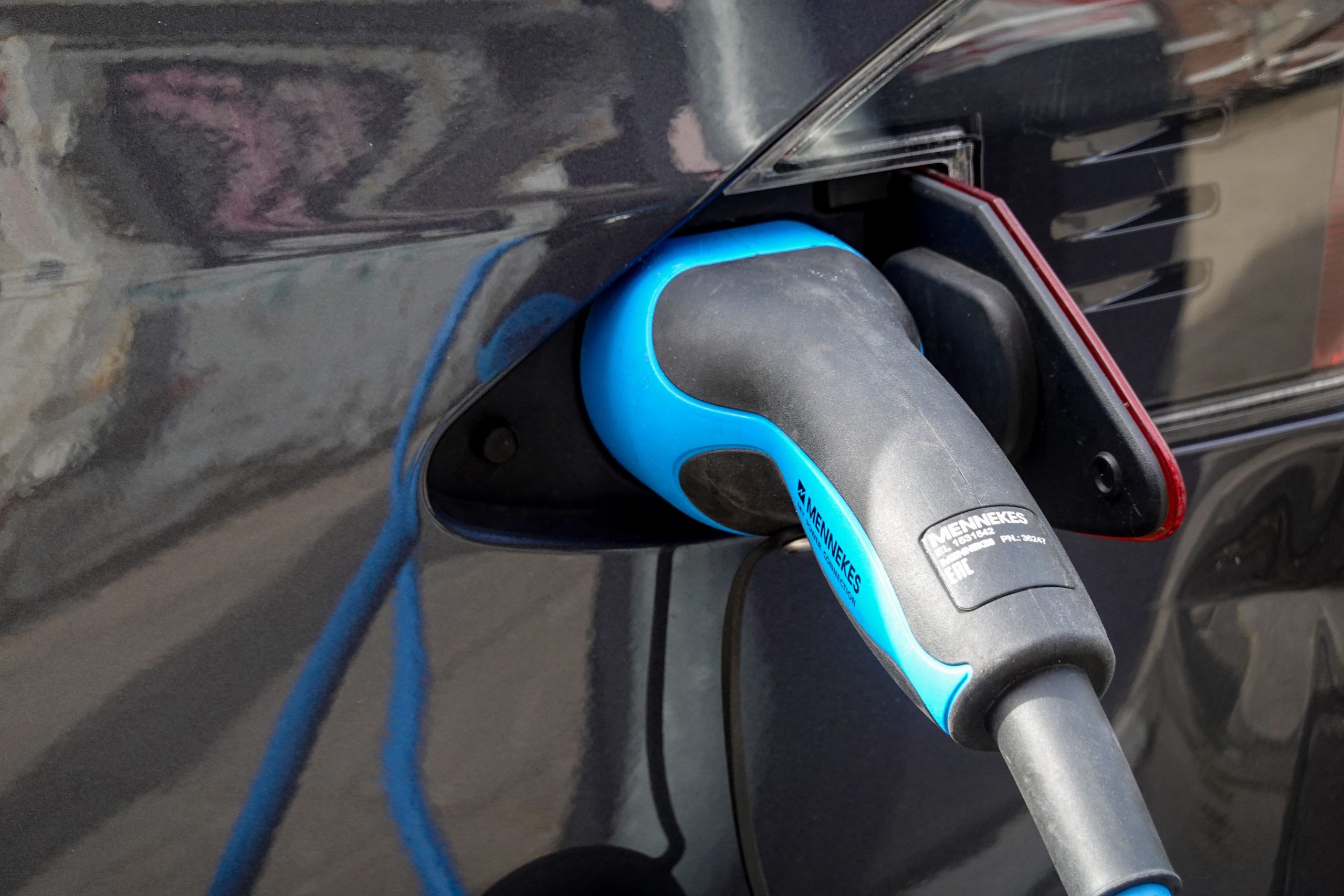
The UK Government has opened a new consultation on the country’s Zero Emission Vehicle (ZEV) Mandate, putting the pace of the transition to electric cars and vans under review. The consultation is examining the targets manufacturers must meet and the flexibilities available to them, while maintaining the Government’s commitment to ending the sale of new petrol and diesel cars by 2030 and reaching 100% zero emission new car and van sales by 2035.
The ZEV Mandate was introduced in 2024 to create a steadily increasing requirement for manufacturers to sell zero emission vehicles. For cars, the target reaches 33% in 2026 before rising to 80% in 2030, while the equivalent target for vans is 24% in 2026 and 70% in 2030. Manufacturers can use a range of flexibilities within the scheme, meaning the headline percentages do not directly translate into the proportion of vehicles that must be sold as battery electric.
The Government is now asking whether the current trajectory remains workable as the market develops. Several options are being considered, including reducing the 2030 car target to between 50% and 70%, alongside an option that would retain the existing trajectory while introducing additional flexibility. The 2035 objective for new cars and vans to be zero emission would remain under all proposals.
For the logistics sector, the discussion is particularly relevant because the transition is progressing at different speeds across vehicle types. Battery electric vans accounted for 9.6% of the UK market in 2025, compared with a regulatory requirement of 16%, while zero emission HGV uptake remained at just 1.4%. For commercial operators, the decision to electrify is also shaped by factors that go well beyond vehicle availability, including payload, range, charging infrastructure, duty cycles and the cost of replacing vehicles.
This is where the wider infrastructure challenge becomes important. The UK now has more than 120,000 public chargepoints, alongside charging infrastructure at homes and workplaces, but national availability figures do not necessarily reflect the needs of commercial fleets. For an operator running vehicles to fixed schedules, the location, power output and reliability of charging infrastructure can be just as important as the number of chargepoints available.
The Government has committed a further £600 million towards public charging infrastructure, but investment needs to happen alongside fleet adoption. Operators need confidence that vehicles can be charged within operational windows, while infrastructure providers need sufficient demand to justify major investment. The transition therefore depends on coordination across manufacturers, fleets, energy providers, infrastructure operators and government.
There is also a question of policy certainty. Changing targets could help respond to current market conditions, but frequent changes to the direction of travel can make long-term investment decisions more difficult. Manufacturers, fleet operators and infrastructure providers are all planning around expectations of future demand, meaning clarity over the direction of policy remains important.
At the same time, electric vehicle demand continues to grow. Government figures show that more than one in four new cars sold in July 2026 were electric, with EV sales 45% higher than the same month a year earlier. More than two million electric vehicles are now registered on UK roads. The challenge is therefore less about whether electrification is happening and more about whether the conditions are in place for it to happen at the scale and speed required.
For logistics, that means looking beyond the vehicle itself. Electrification is connected to grid capacity, charging infrastructure, energy costs, planning, taxation and the operational realities of running freight networks. Getting these elements aligned will be essential if businesses are expected to move from early adoption towards widespread deployment.
Our MD, Kelly Hobson, states:
“The direction of travel towards zero-emission transport is clear, but targets alone won’t deliver the transition. For logistics operators, this has never simply been a question of buying an electric vehicle; it is about whether that vehicle can realistically perform the duty cycle, whether the infrastructure and grid capacity are available in the right places, and whether the commercial case stacks up.
We need policy that is ambitious, but also grounded in operational reality. If targets change without addressing infrastructure, energy, investment cycles and demand, we risk moving the numbers rather than removing the barriers. Equally, continued uncertainty makes it harder for businesses to confidently invest.
The opportunity now is to bring government, energy, infrastructure providers, manufacturers, logistics operators and their customers much closer together. Sustainable logistics will scale when we stop treating vehicle, infrastructure and demand as separate conversations and start building the transition as one connected system.”
The consultation will run until 23 October 2026, with responses informing potential changes to the Vehicle Emissions Trading Schemes Order.
For fleet operators, manufacturers and the wider logistics industry, the outcome could have significant implications for investment decisions over the coming years. The direction towards lower emission transport remains clear, but the route towards it is still being shaped.
Conversations like these will be taking place at Sustainable Logistics LIVE London, where expert panellists will explore the future of EVs, fleet electrification and what needs to happen for the transition to work in practice. Get your tickets now and join the conversation. Sustainable Logistics LIVE 2026 London Tickets, Tuesday 10 November • 9 AM – 4:30 PM | Eventbrite
Read the full Zero Emission Vehicle Mandate review from the Department of Transport: ZEV Mandate review consultation