
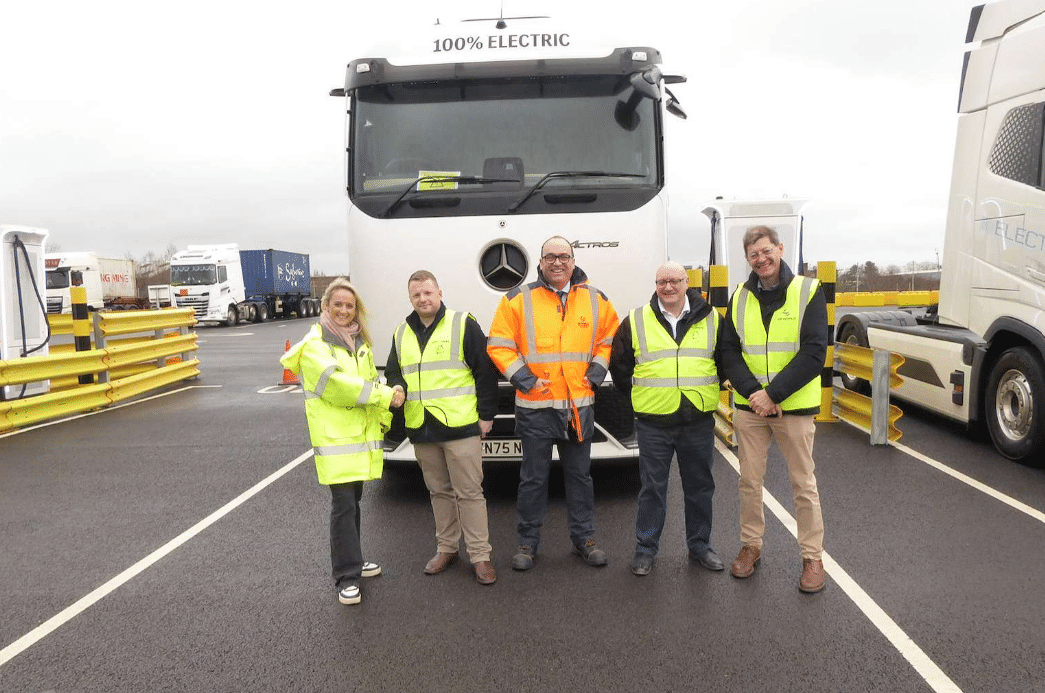
Electric HGVs are being introduced into more freight operations, but questions remain about how reliably they can meet the demands of everyday road transport. Vehicle range, payload capacity and access to charging infrastructure all influence whether an electric lorry is suitable for a particular operation. A new report from Project JOLT, led by the Centre for Sustainable Road Freight (SRF), provides further evidence on these challenges, drawing on more than two years of operational data to examine how electric HGVs perform under different conditions.
The first-round report, Energy and Range Performance of Electric Lorries in-service, analyses data collected between June 2024 and July 2026. The research covers 15 battery-electric HGVs from five manufacturers, operating with 12 fleet operators. Across the trial period, researchers examined 36,265 journeys, more than 840,000 kilometres of driving and 8,366 charging events, providing a substantial dataset of how electric lorries perform in commercial use.
Project JOLT, which stands for Joint Operators Logistics Trial, brings together vehicle manufacturers, logistics operators and researchers to investigate the practical and financial considerations involved in electrifying road freight. Led by the SRF, the project allows electric vehicles to be tested across different fleets and operating environments, with participating organisations sharing data to build a better understanding of their performance. The aim is to establish where electric HGVs can work effectively, what limitations operators need to account for and how businesses can approach investment decisions with greater confidence.
One of the report’s main findings is the relationship between vehicle weight and energy consumption. Gross vehicle weight (GVW) was identified as the strongest measured influence on energy performance, with consumption increasing as vehicles carry heavier loads. Across the vehicles analysed, energy consumption increased by approximately 0.024 kWh per kilometre for every additional tonne of gross vehicle weight. At 25 tonnes, estimated consumption ranged between 1.2 and 1.4 kWh per kilometre, compared with 1.6 to 1.8 kWh per kilometre at 42 tonnes for the vehicles included in the comparison.
This has important implications for operators assessing which parts of their fleet could be electrified. A vehicle completing shorter journeys with lighter loads may perform very differently when carrying heavier freight over longer distances. Advertised vehicle range figures therefore offer only part of the picture, as actual performance will depend on how and where a vehicle is used. Understanding typical payloads, journey distances and daily operating patterns will be essential when deciding whether an electric HGV is suitable for a particular route.
Weather conditions were also found to have a noticeable effect on energy consumption, particularly during colder months. At a gross vehicle weight of 25 tonnes, consumption was approximately 14% higher when temperatures were 10°C or below compared with conditions above 20°C. Wind was another contributing factor, with energy use estimated to be around 10% higher when travelling into a strong headwind compared with a comparable tailwind. Wet weather also increased consumption, although its additional influence was smaller once other variables were considered.
The impact of these conditions becomes particularly relevant when planning journeys close to a vehicle’s available range. The report illustrates this using an electric HGV with approximately 400 kWh of usable battery capacity, estimating a range of around 300 kilometres at 25 tonnes in milder conditions. However, allowing for a 10–20% battery reserve reduces the practical range to approximately 240–270 kilometres. In colder weather, this falls further to around 225–255 kilometres. For operators, this means a route that appears achievable under favourable conditions may require a different charging strategy during winter, particularly where charging facilities are limited.
The research also highlights why individual journeys should not be used in isolation to assess vehicle performance. Energy consumption can vary considerably between trips, even when vehicles are operating at similar weights. Traffic, driving speed, road gradients and route conditions all contribute to these differences. The report found that trip-level energy performance varied by approximately 17% around the modelled average at the same vehicle weight. Looking at longer-term patterns and comparing journeys with similar operating conditions therefore provides a more reliable way of understanding how a vehicle is performing.
For fleet operators, these findings provide a useful starting point for identifying where electric HGVs could be introduced into existing operations. Rather than assuming every vehicle can be replaced immediately, businesses can examine their regular routes, payload requirements and charging arrangements to establish where the technology is most suitable. This is particularly relevant for operators working with tight delivery schedules, where vehicle utilisation and charging downtime need to be factored into the overall cost of running a fleet.
There are already signs that industry trials are leading to further investment in electric HGVs. Following their involvement in electric truck trials, businesses including DP World, Howard Tenens and ATL Haulage have taken steps to introduce electric vehicles into their operations. ATL Haulage, for example, took part in DP World’s EVITA programme, taking delivery of a MAN electric truck in April 2026 to test its suitability for container haulage operations. These developments demonstrate how giving operators the opportunity to trial vehicles on their own routes can help build confidence in the technology and confirm longer-term fleet investment decisions.
However, the latest findings also highlight that further research is needed. The first round provides valuable evidence on energy consumption and operating range, but questions remain around areas such as battery degradation and how performance changes over a vehicle’s working life. As more electric HGVs enter commercial fleets, continued data collection will help establish a clearer picture of their long-term reliability and operating costs.
The findings also need to be considered alongside the wider challenges of electrifying heavy road freight. Vehicle purchase prices, charging infrastructure, electricity costs and the availability of suitable grid connections all influence the financial case for switching from diesel. These factors can vary considerably between operators, depending on fleet size, depot locations and the type of work being carried out. Understanding vehicle performance is therefore only one part of the decision, with businesses also needing to assess whether the supporting infrastructure and economics work for their operations.
Project JOLT’s first-round findings offer a more detailed understanding of what electric HGVs can deliver in real-world conditions, moving the discussion beyond manufacturer specifications and theoretical range estimates. For logistics businesses, the next step is applying this evidence to their own fleets, identifying suitable routes and understanding the operational changes required. The experience of participating operators also shows the value of collaboration between researchers and industry, particularly when businesses are making significant investment decisions. As further results become available, the data will help establish where electric HGVs can offer a practical alternative to diesel and what still needs to change before they can be used more widely across the road freight sector.
To access the full report, Joint Operators Logistics Trial (JOLT): Energy and Range Performance of Electric Lorries in-service, contact dc29@cam.ac.uk