
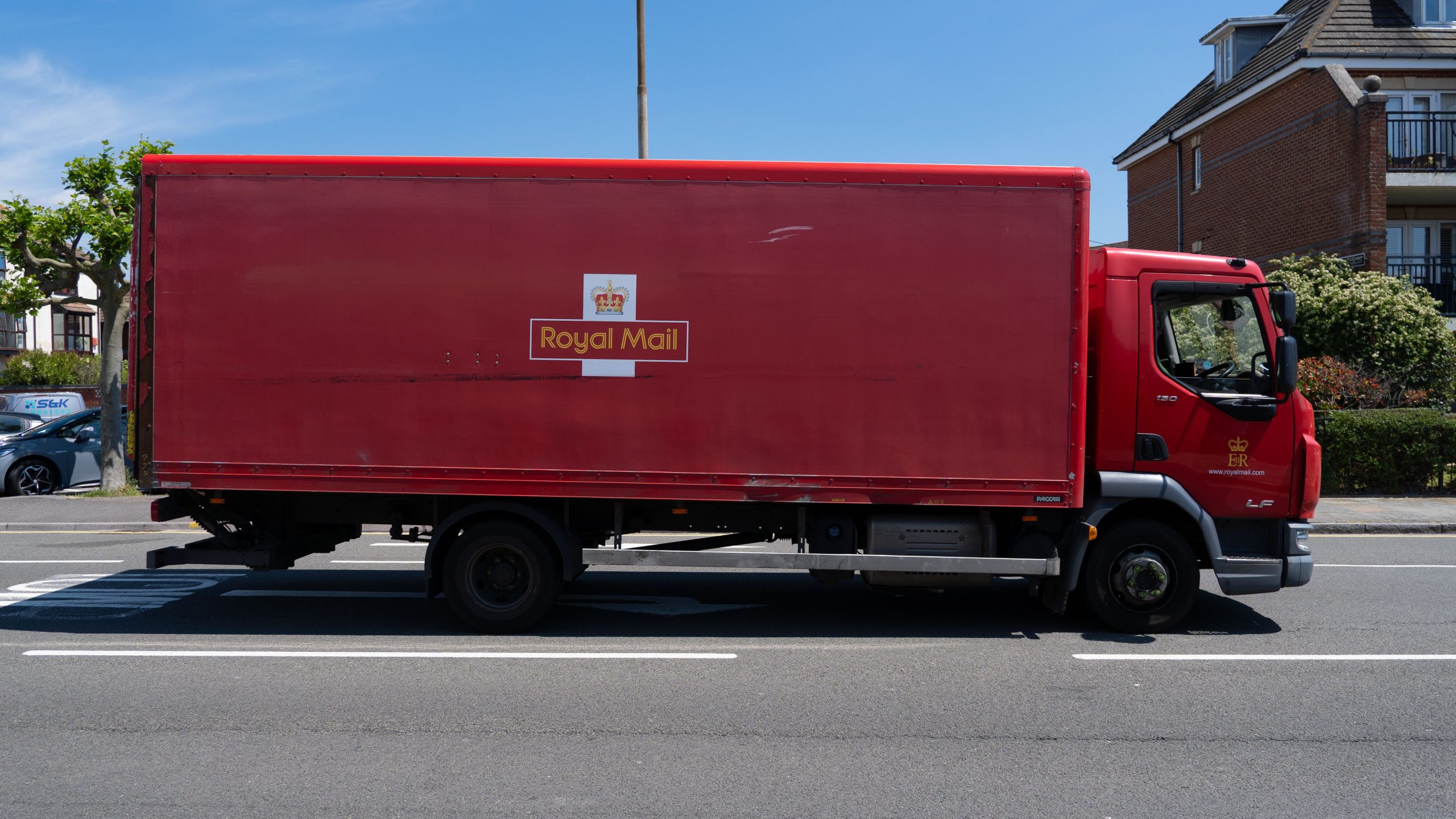
Royal Mail’s latest Sustainability Report reveals a business that is steadily turning long-term climate commitments into measurable operational progress. The organisation has reported a 31% reduction in market-based carbon emissions against its 2020 to 2021 baseline, while average emissions per parcel have fallen by 6% over the past year to 164gCO₂e.
These figures are significant, but they only tell part of the story. Behind the headline results sits a long-term strategy that combines fleet electrification, alternative fuels, renewable electricity, operational efficiency and robust carbon reporting. Rather than relying on a single solution, Royal Mail’s approach demonstrates how meaningful decarbonisation is achieved through continuous improvement across every part of a logistics operation.
As the wider industry works towards increasingly ambitious Net Zero targets, the report offers valuable insight into what successful sustainability strategies are beginning to look like in practice.
Decarbonisation Is Becoming an Operational Strategy
Sustainability has often been viewed as a standalone business function, measured through annual reporting and environmental commitments. Increasingly, however, organisations are embedding carbon reduction into operational decision making.
Royal Mail’s latest results demonstrate this shift.
Reducing emissions has not come at the expense of operational performance. Instead, improvements have been achieved through changes that also support efficiency, resilience and long-term business performance.
This is an important distinction.
For logistics providers operating within increasingly complex supply chains, sustainability is becoming less about individual environmental initiatives and more about designing networks that operate more efficiently. Every improvement in route planning, energy management, vehicle utilisation and infrastructure contributes not only towards emissions reduction but also towards lowering operating costs and improving service reliability.
Rather than viewing decarbonisation as an additional business objective, organisations are increasingly recognising it as part of operational excellence.
Electrification Is Only One Part of the Solution
Fleet electrification remains one of the most visible aspects of Royal Mail’s sustainability programme.
The organisation now operates more than 8,500 electric vehicles, making it the UK’s largest electric delivery fleet. Over 30% of delivery routes now operate using zero-emission vehicles, supported by continued investment in depot charging infrastructure and renewable electricity.
Yet one of the most interesting aspects of the report is that Royal Mail does not present electrification as a complete solution.
While electric vans are proving increasingly effective for last mile deliveries, the report acknowledges that other parts of the network continue to require different technologies. Hydrotreated Vegetable Oil (HVO) is being used across sections of the heavy goods vehicle fleet, while Sustainable Aviation Fuel has also been introduced on selected domestic air routes as part of wider efforts to reduce transport emissions.
This reflects the reality facing many logistics operators.
There is no single pathway to Net Zero. Different vehicle types, operating environments and transport modes require different solutions. Businesses are increasingly adopting technology portfolios rather than searching for one technology capable of solving every challenge.
For many operators, the transition will involve electrification where practical, supported by lower carbon fuels, infrastructure investment and continual operational optimisation.
Measuring Performance Beyond Carbon Totals
Perhaps one of the most valuable indicators within Royal Mail’s report is not the overall emissions reduction but the reduction in emissions per parcel.
Carbon intensity measures how efficiently a network operates regardless of fluctuations in parcel volumes.
As customer demand continues to change and e-commerce volumes evolve, this provides a far clearer picture of long-term operational performance than total emissions alone.
Increasingly, businesses are moving away from reporting environmental performance simply through annual emissions figures. Customers, investors and regulators are looking for more meaningful indicators that demonstrate continuous improvement and operational efficiency.
Reliable emissions data is becoming essential not only for compliance but also for strategic decision making.
Understanding where emissions occur, identifying opportunities for improvement and measuring the impact of investment will become increasingly important as sustainability reporting requirements continue to evolve.
Looking Beyond Scope 1 and Scope 2
Another notable theme running throughout the report is the growing recognition that meaningful decarbonisation extends well beyond an organisation’s own operations.
Royal Mail continues to strengthen its approach to supplier engagement and Scope 3 emissions, recognising that indirect emissions represent a significant proportion of its overall environmental footprint. The report outlines continued work with suppliers to improve emissions reporting, strengthen governance and encourage greater transparency across the value chain.This is becoming one of the defining sustainability challenges across logistics.
Many organisations have already made significant progress in reducing emissions from their own fleets and facilities. The next stage of decarbonisation will increasingly depend on collaboration across supply chains, improved data sharing and closer engagement with suppliers.
No organisation can achieve Net Zero in isolation. As reporting frameworks mature and customer expectations increase, collaboration will become just as important as technology.
Investment Must Be Supported by Long Term Planning
One of the strongest messages throughout the report is that Royal Mail’s progress has not been driven by short-term initiatives.
The organisation continues to invest in renewable electricity, charging infrastructure, fleet replacement, circular economy initiatives and biodiversity projects while aligning its strategy with Science Based Targets initiative (SBTi) commitments.
This demonstrates that sustainability is no longer simply about introducing new technologies.
Successful organisations are embedding sustainability into long-term investment decisions, procurement strategies, operational planning and business governance.
For logistics providers, this requires balancing commercial realities with future resilience. Organisations that build sustainability into business planning today are likely to be better positioned to respond to future regulation, changing customer expectations and evolving reporting requirements.
Lessons for the Logistics Sector
Royal Mail’s latest Sustainability Report provides more than an update on one organisation’s environmental performance. It offers a snapshot of how sustainability within logistics is continuing to evolve.
The report demonstrates that meaningful emissions reductions are achieved through coordinated action rather than isolated projects. Fleet electrification remains an important part of the transition, but so too do alternative fuels, operational efficiency, renewable energy, supplier engagement, infrastructure investment and robust carbon measurement.
Perhaps the most significant lesson is that sustainability is becoming inseparable from operational performance.
As logistics networks become increasingly connected and data driven, organisations that integrate environmental objectives into everyday decision making are likely to achieve stronger commercial outcomes alongside measurable carbon reductions.
Royal Mail’s progress shows that the journey to Net Zero is not defined by one breakthrough technology or a single investment. It is built through consistent improvement, collaboration and a willingness to rethink how logistics networks are designed and operated.
For an industry navigating rising costs, increasing customer expectations and accelerating decarbonisation, that may be the report’s most valuable takeaway.
Royal Mail (2026) Royal Mail Sustainability Report 2025–26. Available at: Royal Mail Sustainability Report 2025-26