
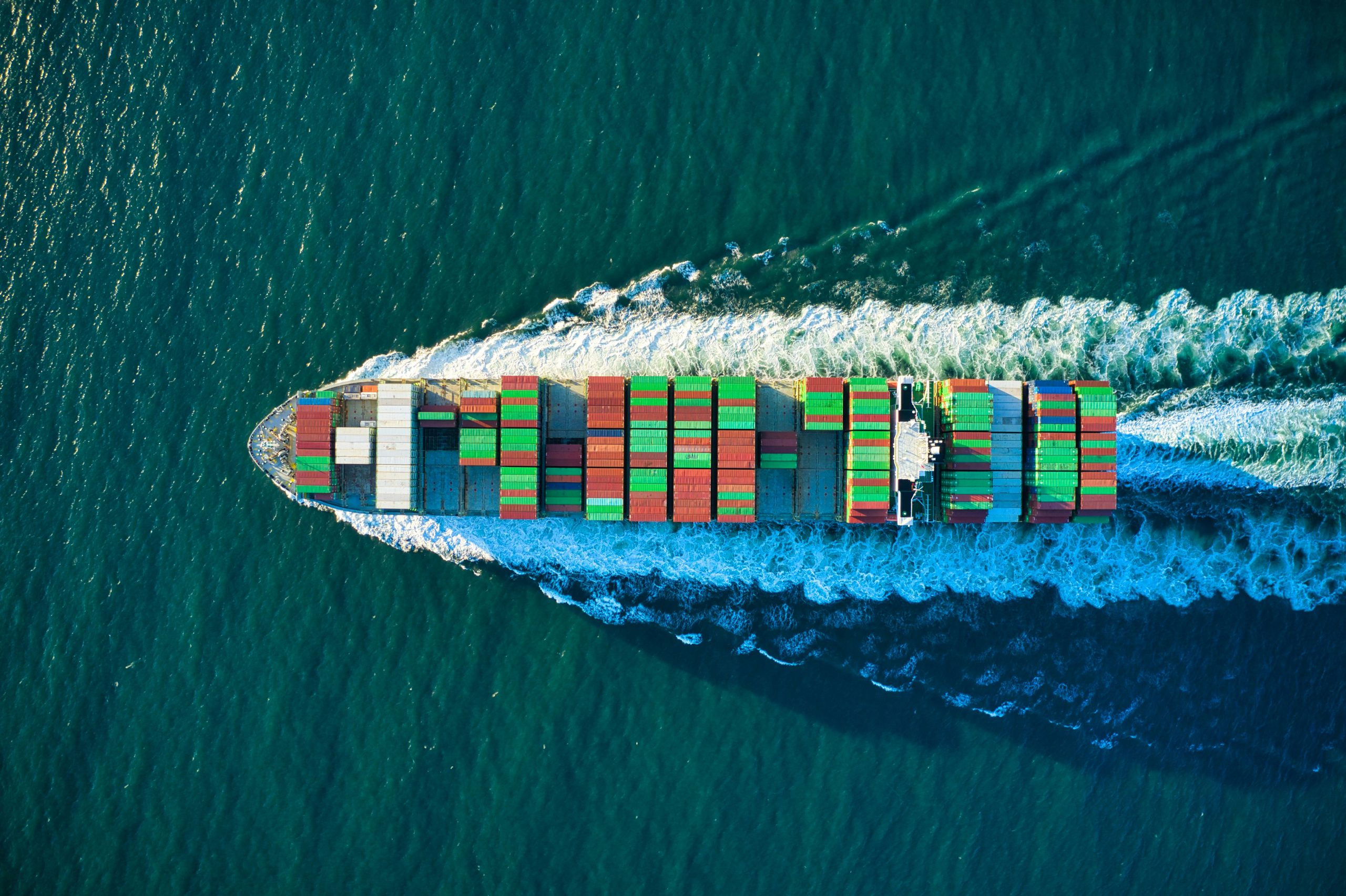
Investment in liquefied natural gas (LNG) powered vessels highlights how shipping companies are navigating the early stages of maritime decarbonisation. As regulatory pressure from the International Maritime Organization (IMO) increases and global fuel standards evolve, operators are balancing near term emissions reductions with long term uncertainty around zero carbon fuels. Alongside new vessel technologies, shipping lines are increasingly using carbon credits and insetting strategies to address residual emissions while the sector works toward net zero by 2050.
Recent investment in LNG powered vessels highlights how operators are attempting to balance near term operational realities with long term decarbonisation goals. While LNG is not a zero-carbon solution, it is increasingly viewed as a transitional fuel that can support emissions reductions while the industry develops scalable alternatives such as ammonia, hydrogen and synthetic fuels.
The debate surrounding LNG also reflects a broader challenge facing maritime decarbonisation. Shipping companies must navigate tightening regulatory frameworks while managing operational risk, fuel availability and infrastructure constraints.
Regulatory pressure from the IMO
Much of the momentum behind maritime decarbonisation comes from the policy framework established by the International Maritime Organization. The IMO’s 2023 greenhouse gas strategy sets out a pathway for the sector to reach net zero emissions by or around 2050.
The strategy also introduces checkpoints designed to accelerate emissions reductions across the global fleet. International shipping emissions are expected to fall by at least 20% by 2030 compared with 2008 levels, with an ambition to reach 30%. By 2040, reductions are expected to reach at least 70%, striving for 80%.
Alongside these emissions reductions, the IMO has also set an ambition for zero or near zero emission fuels and technologies to represent at least 5% of the energy used by international shipping by 2030, with a stretch target of 10%.
LNG as a transitional fuel
In response to these pressures, shipping companies are investing heavily in dual fuel and LNG powered vessels. Fleet modernisation programmes are now being used to improve fuel efficiency while enabling ships to switch between conventional fuels and lower carbon alternatives.
LNG is widely seen as a transition option. Compared with heavy fuel oil, LNG can reduce carbon dioxide emissions and significantly cut local air pollutants such as sulphur oxides and particulate matter.
However, LNG’s role in the transition remains contested. While it offers short term emissions reductions, it does not eliminate carbon emissions entirely. As a result, many new vessels are being designed with dual fuel capability to maintain flexibility as the industry develops new fuel pathways.
Regulatory debate and industry pushback
The pace and structure of regulation has also become a point of debate within the shipping sector. Negotiations at the IMO throughout 2025 highlighted differing views among governments and industry stakeholders about how quickly the sector should transition away from fossil fuels.
Discussions around global carbon pricing for shipping illustrate this challenge. Proposals for emissions fees and fuel intensity standards have been designed to encourage the adoption of lower carbon fuels while generating funding for the development of new technologies.
However, these proposals have also faced criticism from some countries and industry groups who argue that technological readiness and fuel availability remain significant barriers to rapid decarbonisation.
This tension between ambition and feasibility continues to shape the policy landscape for maritime emissions reduction.
The growing role of carbon credits and insetting
Alongside technological change, many shipping companies are increasingly turning to carbon markets to address emissions that cannot yet be eliminated.
Carbon credits and insetting projects are becoming part of broader corporate climate strategies across the maritime sector. These mechanisms allow companies to compensate for residual emissions while investing in projects that deliver measurable emissions reductions.
Emerging regulatory frameworks may also incorporate market-based mechanisms directly into maritime policy. Ships that exceed emissions thresholds could face emissions fees or be required to purchase credits, creating a financial incentive for cleaner fuels and more efficient operations.
While carbon credits alone will not deliver deep decarbonisation, they are increasingly viewed as a complementary tool that can support the transition as zero emission fuels scale.
Navigating an uncertain transition
For the maritime sector, the pathway to net zero will likely involve a combination of fuel switching, operational efficiency improvements and market-based mechanisms.
LNG vessels illustrate how operators are making investments today while keeping options open for future fuels. At the same time, regulatory developments and carbon markets are reshaping the economic landscape in which shipping companies operate.
The challenge now is ensuring that near term solutions support, rather than delay, the transition toward genuinely zero emission shipping.
Find out more about IMO targets and regulation: 2023 IMO Strategy on Reduction of GHG Emissions from Ships